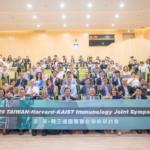
Prestigious International Academic Symposium Focuses on Cancer Immunology and Cutting-Edge Medical Research The “2nd Taiwan–Harvard–KAIST Immunology Joint Symposium” was grandly held in Taiwan in 2026 Read More …

Cancer and Immunology Research Center
National Yang Ming Chiao Tung University
Prestigious International Academic Symposium Focuses on Cancer Immunology and Cutting-Edge Medical Research The “2nd Taiwan–Harvard–KAIST Immunology Joint Symposium” was grandly held in Taiwan in 2026 Read More …
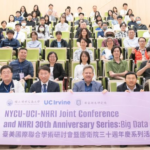
The “Taiwan–U.S. International Joint Symposium & NHRI 30th Anniversary Series: Big Data and Cancer,” co-organized by the Cancer and Immunology Research Center of National Yang Ming Chiao Tung Univ Read More …

免疫療法因重大貢獻獲得諾貝爾醫學獎,被視為癌症治療的新希望。然而最新研究顯示,癌細胞可不是爛草莓。在治療壓力下,它們反而會展現抗壓性,成功躲過免疫系統的追擊。 頭頸癌患者在接受標靶治療後,再接續免疫療法時,常常無法達到預期療效。研究團隊深入解析後揭露了一個關鍵原因:長期標靶治療帶來的「治療壓力」會讓癌細胞提高警覺,加速重塑腫瘤微環境,甚至主動關閉原本用來啟動免疫細胞的訊息通路,讓免疫療法失去效果。 Read More …
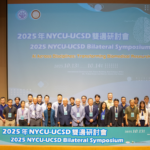
President Chi-Hung Lin (front row, eighth from left) of NYCU joined distinguished guests and faculty members for a group photo. Co-hosted by NYCU’s Center for Intelligent Drug Systems and Smart Bio-de Read More …
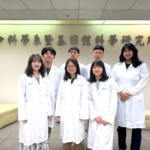
生命科學系暨基因體科學研究所助理教授袁維謙(前排中)研究團隊。 陽明交大與哈佛聯手發現關鍵剎車基因 肝臟是人體中少數具有再生修復能力的器官,最近陽明交大與哈佛大學聯手,發現了這項「自癒力」背後的基因,讓再生醫學帶來新的曙光。 膽管的修復是肝臟多種自癒力表現之一。當膽管受損時,原本負責代謝功能的肝細胞竟能搖身一變為膽道上皮細胞,並且衝向前線修補受損的膽管。然而,這項轉變背後的分子機制長期未明。 由肝 Read More …
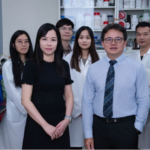
實驗室合影,前排為生化所郭津岑教授(左)與北榮急診醫學部主任黃獻皞(右) 新研究揭示肌少症背後的隱形推手 肌少症恐怕不只是年老體衰的結果。一項由陽明交大與臺北榮總合作的最新研究發現,腸道荷爾蒙GLP-1竟會直接抑制肌肉的再生與修復,成為肌少症前所未見的新成因。這是全球首度證實腸道荷爾蒙對肌肉生成具有負面影響,為肌少症診斷與治療開啟嶄新視角。 GLP-1(Glucagon-like peptide- Read More …