Prestigious International Academic Symposium Focuses on Cancer Immunology and Cutting-Edge Medical Research
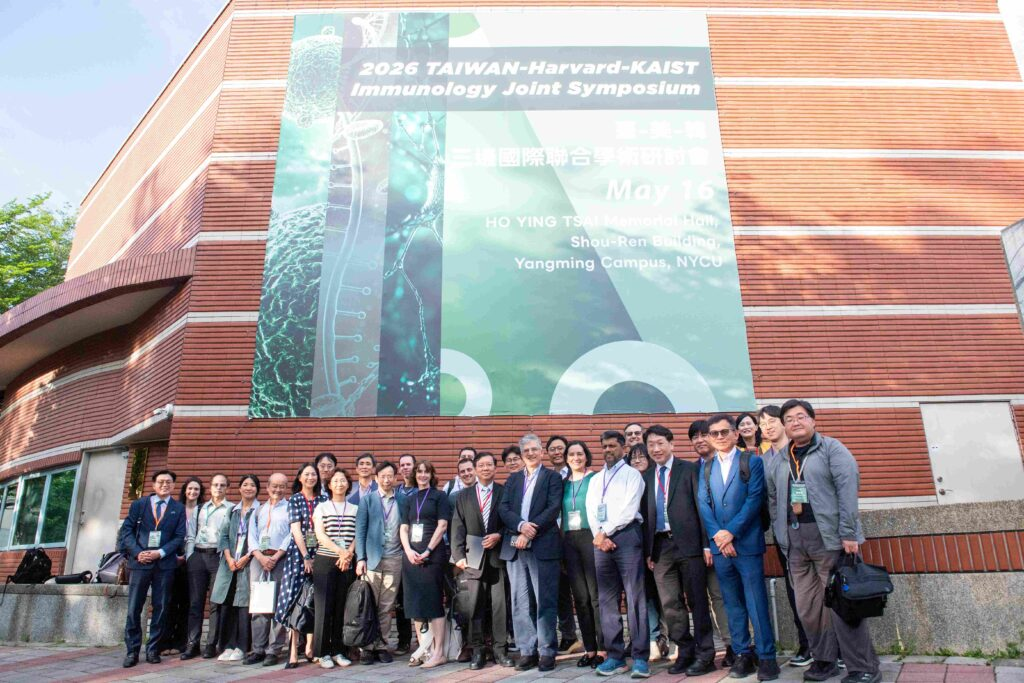
The “2nd Taiwan–Harvard–KAIST Immunology Joint Symposium” was grandly held in Taiwan in 2026. The symposium was jointly organized by National Yang Ming Chiao Tung University (NYCU), the National Health Research Institutes (NHRI), and Linkou Chang Gung Memorial Hospital. The event officially opened on May 15 at Linkou Chang Gung Memorial Hospital and continued on May 16 at NYCU’s Yangming Campus. The symposium brought together leading experts and scholars from Taiwan, Harvard Medical School in the United States, and the Korea Advanced Institute of Science and Technology (KAIST), focusing on frontier topics including cancer immunology and translational immunomedicine. Participants engaged in in-depth discussions on the latest advances in immunological research and trends in clinical applications. The symposium featured lively academic exchanges and enthusiastic interactions, demonstrating NYCU’s outstanding research capabilities and international influence in oncology and immunology, while also highlighting the strong foundation and close partnership among Taiwan, the United States, and Korea in biomedical scientific collaboration.

Establishing an International Collaborative Platform to Build Global Scientific Bridges
Professor Shie-Liang Hsieh, chief convener of this cross-institutional symposium, introduced the origins and development of the trilateral academic collaboration among Taiwan, the United States, and Korea during the opening session on May 16. He noted that Dr. Gene Lay, founder and CEO of BioLegend, has long been committed to advancing global biomedical research. Through the Laygend Foundation, Dr. Lay donated research funding to Brigham and Women’s Hospital (BWH) at Harvard Medical School to establish the Gene Lay Institute of Immunology and Inflammation (GLI). The institute actively supports basic research and drug development targeting major diseases such as neurodegenerative disorders, immune-related diseases, and cancer. Building upon this collaborative foundation, NYCU Vice President Muh-Hwa Yang and NHRI Director Shie-Liang Hsieh traveled to Boston in October 2023 to represent Taiwan in signing a five-year memorandum of understanding (MOU) with GLI, formally establishing an international collaborative research platform. Both parties aim to deepen Taiwan–U.S. cooperation in cancer immunology, neuroinflammation, and translational medicine through the integration of international research resources, talent cultivation, and academic exchange, thereby enhancing Taiwan’s global impact in biomedical research. In recognition of Dr. Gene Lay’s long-standing contributions to promoting Taiwan’s international academic exchanges, advancing biotechnology innovation, and supporting global biomedical research, NYCU conferred upon him an Honorary Doctor of Science degree in October 2024, presented by President Chi-Hung Lin, honoring his exceptional achievements in the global biotechnology industry and international academic collaboration. Furthermore, in May 2025, the inaugural “Taiwan–U.S.–Korea Trilateral Joint Symposium” was hosted by KAIST in Korea, centering on cancer immunology and immunology of aging. The symposium marked the official launch of long-term trilateral scientific collaboration and talent exchange among Taiwan, the United States, and Korea, symbolizing the gradual formation of an international biomedical research network and laying an important milestone for future global cooperation.
Deepening Taiwan–U.S.–Korea Collaboration Through Continued International Academic Exchange
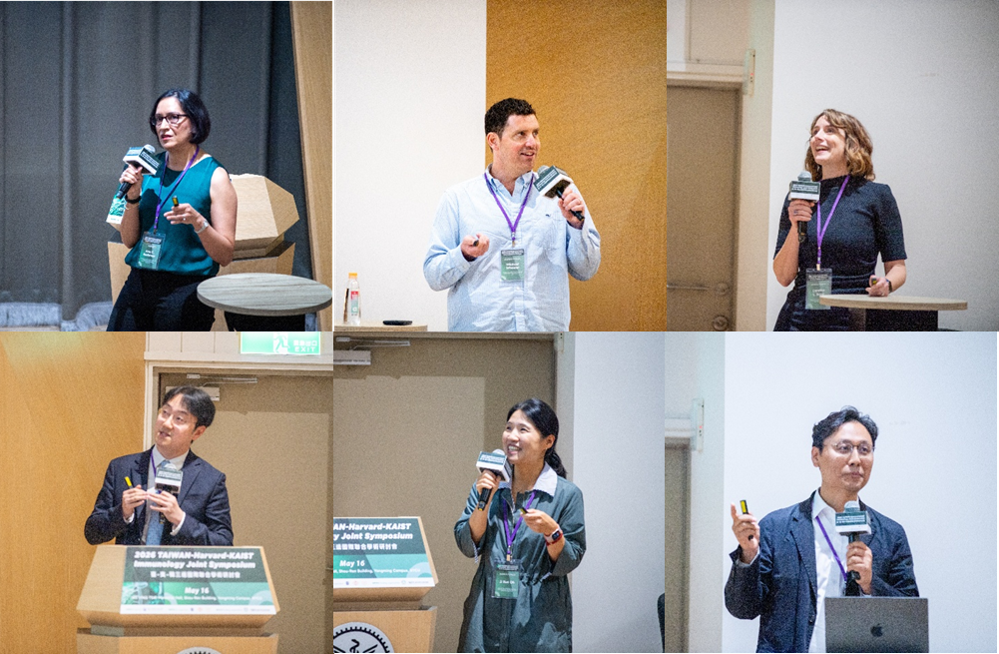
Top row: Ana Anderson (left), Michael Wheeler (center), Caroline Sokol (right)
Bottom row: Jeong Seok Lee (left), Ji Eun Oh (center), Je-Min Choi (right)
A total of 19 scholars from the United States and Korea participated in this year’s exchange activities, arriving in Taiwan beginning on May 11. The visiting delegation first attended the “2026 International Medical Metabolism Conference,” hosted by NHRI from May 13 to 14, where in-depth discussions were conducted on important topics such as metabolic medicine, immune regulation, nutrition, and aging research. The conference fully demonstrated the fruitful outcomes of interdisciplinary international collaboration.
Subsequently, at the “2nd Taiwan–Harvard–KAIST Immunology Joint Symposium” held on May 16 at the HO YING TSAI Memorial Hall, Shou-Ren Building on NYCU’s Yangming Campus, 17 scholars from the United States and Korea delivered keynote lectures and participated in academic exchanges. The event attracted more than 150 faculty members and students from within and outside the university. The venue was filled to capacity, with enthusiastic audience participation and lively discussions that vividly showcased the innovative energy sparked by international academic collaboration.
The symposium invited Professor Ana C. Anderson from Harvard Medical School as the keynote speaker. Professor Anderson is a leading expert in tumor immunology and T-cell regulation and is recognized as one of the pioneers in TIM-3 research. In May 2025, she signed a three-year MOU with Professor Muh-Hwa Yang of NYCU to jointly investigate the tumor microenvironment in early-onset cancers.
During her lecture, Professor Anderson presented findings from single-cell RNA sequencing studies across age groups in colorectal cancer, revealing unique tumor characteristics and immune microenvironment alterations associated with early-onset colorectal cancer, which drew significant attention from attendees.
Professor Jeong Seok Lee of KAIST then shared his research on spatial changes within the tumor microenvironment during immunotherapy for metastatic gastric cancer, as well as their effects on therapeutic response and drug resistance. Professor Ji Eun Oh of KAIST discussed how abnormal B-cell differentiation in cancer patients affects the durability and diversity of antibody-mediated immune responses.
The second session focused on neuroimmunology and inflammatory regulation. Professor Michael Wheeler from Harvard Medical School explored how signaling between the brain and body influences complex behaviors and physiological regulation. Professor Je-Min Choi from Hanyang University in Korea analyzed the activation states and functional roles of CD4 T cells in neuroinflammatory autoimmune diseases. Finally, Professor Caroline Sokol from Harvard Medical School discussed the interactions and regulatory mechanisms between the nervous and immune systems in allergic inflammatory responses. The symposium presentations covered a wide range of topics, including basic research, clinical applications, and emerging therapeutic strategies, fully reflecting current international frontier research trends and inspiring extensive discussion and in-depth academic exchange among participants.
Looking Ahead to the Third Taiwan–U.S.–Korea Trilateral Joint Symposium
The “3rd Taiwan–Harvard–KAIST Immunology Joint Symposium” is expected to be hosted by the United States and held in Boston, continuing to strengthen cross-national collaboration among leading research institutions in Taiwan, the United States, and Korea. The partnership will further expand collaborative research in key medical fields including cancer immunology, immunology of aging, and neuroinflammation. Moving forward, the three parties will continue to promote cutting-edge biomedical research and innovation through academic exchange, talent cultivation, and integration of scientific research resources. This trilateral collaborative platform not only fosters long-term exchanges and substantial cooperation among top international scholars but also accelerates the translation of scientific discoveries and expands global research collaboration capacity. Ultimately, it will further enhance Taiwan’s international visibility, academic influence, and global competitiveness in the fields of immunology and translational medicine.